
This is a Ristretto Post [Short and Intense]:
Anthropic just released its most powerful publicly available model. Here’s what changed, what it can do and what it will do to your API bill.
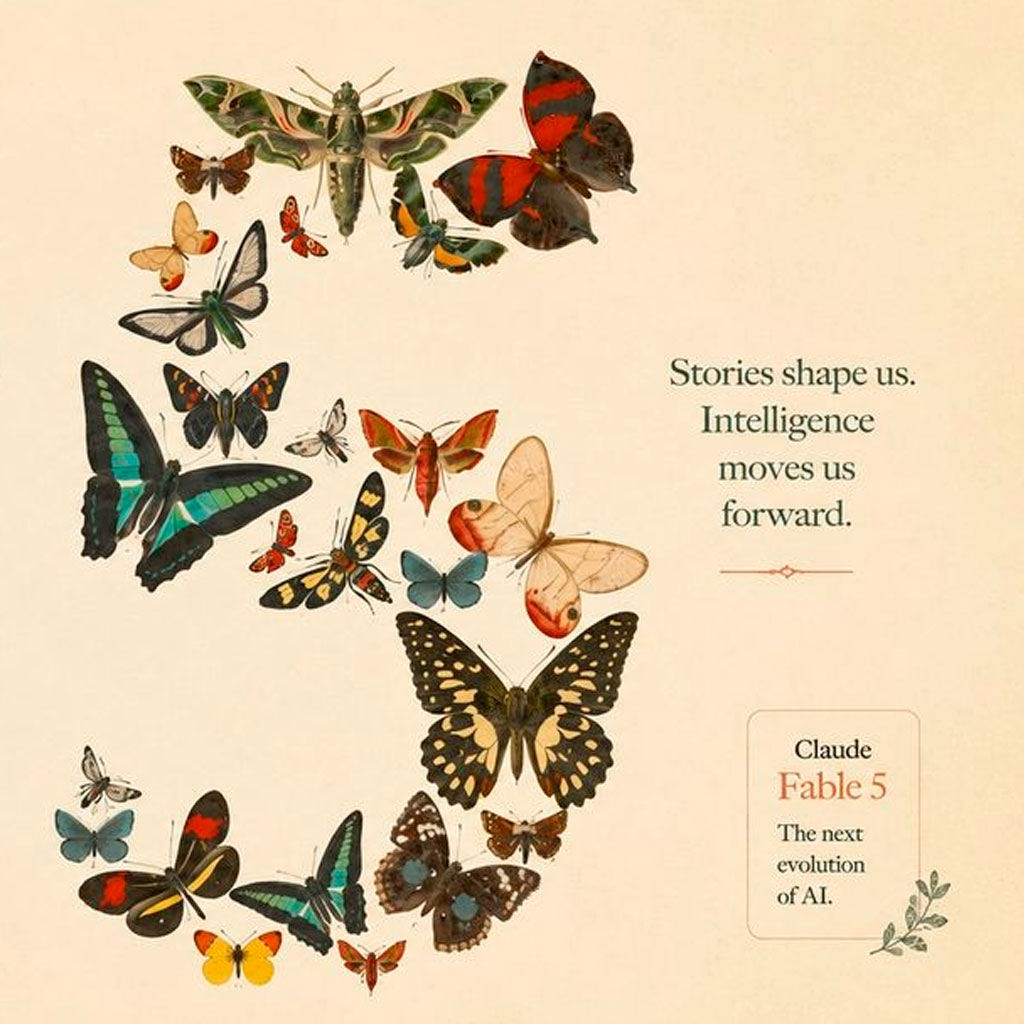
On June 9th, Anthropic quietly dropped something that wasn’t so quiet once people started using it. Claude Fable 5 is the first publicly available model in the same family as Anthropic’s Mythos systems, the ones that sent shockwaves through the cybersecurity world earlier this year for their superhuman ability to find and exploit vulnerabilities. The difference is that Fable 5 ships with the guardrails in place. Mythos 5, the version without them, remains restricted to vetted partners.
What’s Actually New
Fable 5 is built for autonomous knowledge work and coding, long-running, complex, asynchronous tasks that previously required frequent human check-ins. It executes well-scoped work with few mistakes, automatically self-correcting through verification loops.
But the headline demo wasn’t a dry benchmark. Fable 5 is the first Mythos-class AI model capable of creating playable video games from a single text prompt, and beyond game creation, the model can actively play existing games, including completing a full run in Slay the Spire. Anthropic also published a timelapse of it beating Pokémon FireRed via vision alone. Useful? Debatable. Impressive? Undeniably.
Under the hood: the models carry a 1 million token context window, 128,000 maximum output tokens and a knowledge cutoff of January 2026. On benchmarks, Fable 5 scores 80.3% on SWE-Bench Pro versus GPT-5.5’s 58.6%, and leads on nearly every benchmark Anthropic published.
The Token Math
Here’s where it gets real for anyone building with the API.
Claude Fable 5 costs $10 per million input tokens and $50 per million output tokens. Batch API pricing is $5 per million input and $25 per million output. That’s the sticker price. Compare that to Opus 4.8 at $5/$25 per million tokens, Fable 5 is exactly double.
Prompt caching softens the blow: a 90% prompt-caching discount on input brings cached reads down to $1 per million tokens. For agent workflows with long, repeated system prompts, that’s not a rounding error, it’s a survival math.
| Model | Input ($/M) | Output ($/M) |
|---|---|---|
| Claude Sonnet 4.6 | ~$3 | ~$15 |
| Claude Opus 4.8 | $5 | $25 |
| Claude Fable 5 | $10 | $50 |
The Free Window and What Happens After
Through June 22nd, Fable 5 is included in Pro, Max, Team, and seat-based Enterprise plans at no extra cost. On June 23rd, Anthropic pulls it from those plans, requiring usage credits going forward.
The practical catch: even during the free window, a Fable 5 session burns through your plan allowance about twice as fast as the same work on Opus 4.8. So, Carefull !!!
When the Premium Makes Sense
For high-volume, well-defined workflows classification, summarization, structured extraction, RAG retrieval, Opus 4.8 at $5/$25 or Sonnet 4.6 will produce equivalent output. The price difference on 10 million output tokens is $250,000/year versus $125,000/year. That’s not a rounding error. The model selection logic is simple: route complex, long-horizon, agentic work to Fable 5. Route everything else to Opus or Sonnet. The capability gap is real. So is the cost.